









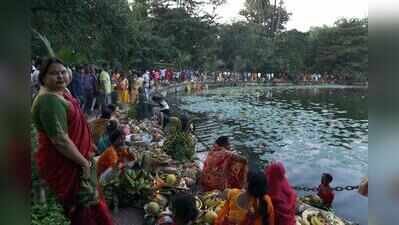
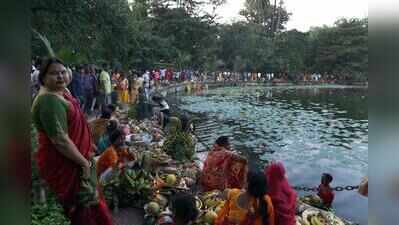
Kolkata: If Bengal govt has its way, Chhath Puja could make a comeback to Rabindra Sarobar and Subhas Sarobar. State urban development minister Agnimitra Paul on Wednesday morning said the govt is considering allowing Chhath rituals at Rabindra Sarobar this year, subject to safeguards to prevent pollution of the water body.The lake and its surrounding grounds have been out of bounds for Chhath devotees since 2019, when KMDA began strictly enforcing National Green Tribunal’s ban. For the past seven years, the entire lake area has been cordoned off for three days during the festival to prevent violations of the order aimed at protecting Rabindra Sarobar’s ecology. The ban is currently in force at Subhas Sarobar as well.“This time on the instruction of the CM, we are thinking of allowing the ritual to be performed at the lake. Why shouldn’t we allow it? Where else will people of the locality perform Chhath Puja? We will take precautions; our workers will be present there and volunteers from the families of devotees will clean up the lake and take away materials after offering prayers,” Paul said during an inspection of the city’s ghats ahead of the festival on Nov 15 and 16.Paul said the govt will approach NGT and seek a way forward. “In Chhath Puja, people don’t do anything harmful. Prayers are offered and lamps are lit while standing in water. We will not allow litter. Chhath Puja will be conducted by taking care and protecting the environment,” she said.However, following widespread concern over her proposal, the minister clarified later in the day that the legal cell is looking into the issue. “Since there is a ban by NGT, if we do not get permission to hold Chhath Puja there, alternative arrangements are in place. In south Kolkata, around 50 ghats will be ready for devotees. There will be changing rooms and bio-toilets at these ghats,” she said while examining a water body at Jodhpur Park.The previous Trinamool Congress govt had initially been reluctant to enforce the NGT ban and moved Supreme Court against the 2017 NGT order. It enforced the restriction two years later after the apex court refused to stay the tribunal’s order, which was also upheld by Calcutta High Court. KMDA and KMC subsequently arranged alternative water bodies for devotees to perform Chhath rituals.Subhas Datta, whose PIL on pollution at Rabindra Sarobar led to the NGT order, said the matter has not yet been disposed of by Supreme Court and the state govt will have to seek the apex court’s permission before allowing Chhath Puja at the lake.Lake regulars and environmentalists expressed concern over the announcement. “The water of Rabindra Sarobar is already polluted,” said environmentalist Somendra Mohan Ghosh.Birders also raised concerns over pollution from firecrackers burst inside the lake grounds by Chhath devotees. “Earlier, crackers used to be burst from 4 am. They would drive the birds away. The loud noise also led to death of some birds,” said one of them.(With inputs from Saikat Ray)